"At the beginning of the 19th century, higher standards of education,
the invention of fast and efficient printing presses, and cheap paper
production combined to create a new, mass market for literature in
England: sensationalistic, graphic "shilling shockers” for the masses.
By 1827, macabre literary material dealing with witchcraft, deformity,
depravity, insanity, sadism and gore, could be found in such
publications as Legends Of Terror, a 40-part omnibus of supernatural
tales, and The Casket, a weekly magazine-type publication which touted
itself as "the first of the penny papers”; this was also the period
when numerous annals of violent crime, such as The Tell-Tale and The
Terrific Register, were published. Edward Lloyd, a bookseller turned
publisher, detonated the penny-pulp market from 1836 onwards with the
inauguration of a new line of sensationalistic mass-produced "penny
bloods”, filled with wild, vivid and gruesome stories and serials
written by a pool of writers that included Thomas Peckett Prest, James
Malcolm Rymer, and E.P. Hingston. Best-known amongst these works were
Varney The Vampyre and The String Of Pearls, featuring Sweeney Todd the
Demon Barber. One of Lloyd's most successful rivals, both as an author
and later as an editor and publisher, was G.W.M. Reynolds, whose grim
1845 serial Mysteries Of London was immensely popular; in 1846 Reynolds
started his own journal, Reynolds' Miscellany, launched with a new
serial shocker by Reynolds himself entitled Wagner The Wehr-Wolf.
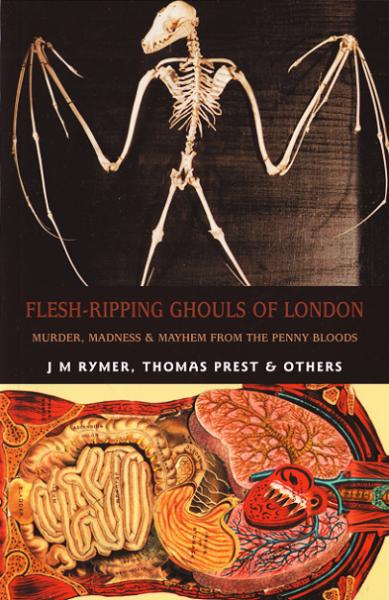
FLESH-RIPPING GHOULS OF LONDON is a new anthology which collects 30
true-crime reports, serial chapters and short stories from the golden
age of the penny bloods. It constitutes the widest history and
selection of this literary output currently available."