Archive for the 'Event' Category

Page 61 of 104

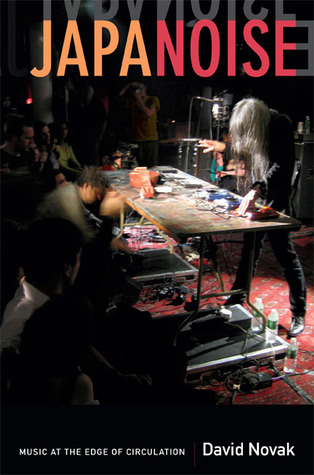
David Novak Reads From Japanoise at Quimby’s 11/22 With performances by Roth Mobot and Peter Speer

Nov ’13
22
7:00 pm

japanoise

David Novak’s new book Japanoise: Music at the Edge of Circulation (Duke University Press) describes how Noise, an underground music made through an amalgam of feedback, distortion, and electronic effects, became a global phenomenon. Noise first emerged as a genre in the 1980s, circulating on cassette tapes traded between fans in Japan, Europe, and North America. With its cultivated obscurity, ear-shattering sound, and over-the-top performances, Noise captured the imagination of a small but passionate transnational audience. But does Noise really belong to Japan? Is it even music at all? Novak draws on more than a decade of fieldwork to trace the “cultural feedback” that generated Noise in circulation between Japan and the United States, illustrating his talk with rare videos of Noise performances.


Novak’s presentation at Quimby’s will also be supported by electronic music performances featuring Roth Mobot, the circuit bent hybrid performance/teaching duo of Tommy Stephenson and Patrick McCarthy (www.RothMobot.com) and Peter Speer, a Chicago artist working with improvised electronic sound (www.diode-ring.com).


“David Novak goes inside the Noise scene and presents an astounding perspective: historically astute, inspired, and completely shell-shocked.”

                              —Thurston Moore, Sonic Youth


David Novak is Associate Professor of Music at the University of California, Santa Barbara. He is the author of essays in Public CultureCultural Anthropology, and The Wire, and his research has recently been featured on podcasts by MIT and MoMA. Novak is also a radio host, sound engineer, and musician who has performed in the groups Habit Trail, Maestros, the Anthony Braxton Ensemble and Dymaxion.


For more info: www.japanoise.com

For the Facebook event invite: https://www.facebook.com/events/204576466391960/


Friday, November 22, 7pm – Free Event

Anya Davidson Reads and Signs School Spirits 11/12

Nov ’13
12
7:00 pm

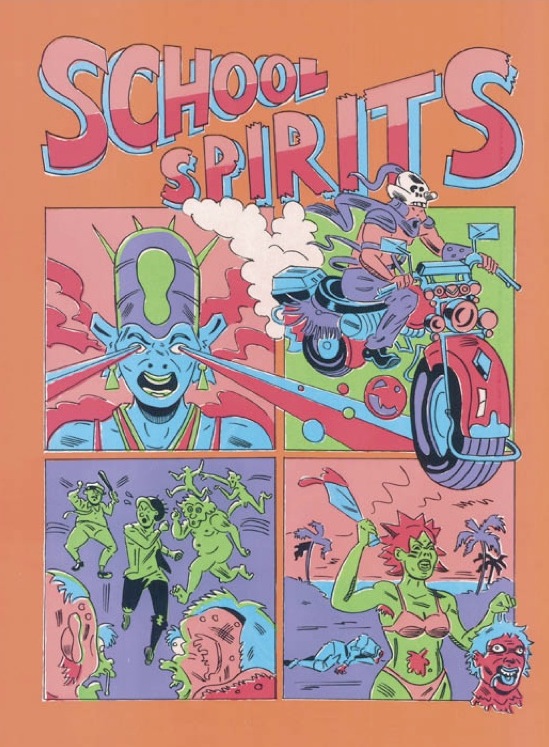
schoolspiritsSchool Spirits is Anya Davidson‘s idiosyncratic and captivating debut full-length graphic novel. It is the story of Oola, a high school student with an unusual connection to the supernatural. Comprised of four chapters, each deploying a different narrative technique, School Spirits is at once funny, sexy, mystical and, above all, utterly readable. Davidson’s crisp cartooning style makes even the strangest occurrences somehow seem plausible. This publication is sure to appeal to Davidson’s existing extensive underground following, as well as to fans of the farther reaches of contemporary graphic fiction.

Anya Davidson is a cartoonist and musician based in Chicago. She is the author of numerous zines and was a member of the acclaimed band Coughs. More info at anyadavidson.blogspot.com.

School Spirits
Hardcover, 152 pages PictureBox, $19.95
For more info: dan(at)pictureboxinc(dot)com

Quimby’s gift to you, in honor of our own holiday, Quimbas at this event: Take a nibble of a free Krampus Candy Cane.  But don’t gobble too quickly, little fellow. There’s a special Krampus mystery missive wrapped on that sweet treat.

Gene Gregorits Reads With Alan Hoffmann 11/8

Nov ’13
8
7:00 pm

fishhook
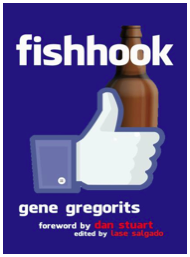
In Gene Gregorits’ latest, Fishhook (Monastrell Books), he takes a break from his Dog Days series, which has won him a mountain of small press support while also inviting hellish scorn since its emergence last year. Throughout this new volume’s 550 pages, we experience the notorious cult writer and well-known Facebook abuser’s oftentimes hazardous day-to-day life with both humor and a terrifying clinical detachment. Fishhook is the first book of its kind: a literary anthology comprised entirely of status updates. It works as a conceptual coffee table piece, but fans of his novels can investigate this collection as a real life companion to both Dog Days and Johnny Behind the Deuce.

The work of Gene Gregorits has been hiding in plain sight for 20 years. His first 2 books, 2002’s Sex & Guts and 2007’s Midnight Mavericks: Reports From The Underground, sold less than 50 copies each, despite heavy marketing, exceptional writing, and one-of-a-kind interviews. He finds the relentless attempts to extinguish him as a writer and force of nature amusing, particularly now that with his own imprint, Monastrell, he has finally managed to discover an intelligent and informed readership that, like him, is none too happy about the current void in American literature. His rapidly growing cult of ne’er do wells, malcontents, and highly literate reprobates seems to be largely based in Chicago, and he is very excited to meet every one of them on November 8th.
Gregorits is coming all the way from Florida for this event; he will be reading from Dog Days Volume Two, Fishhook, and his current work-in-progress, Intra-Coastal: One Year On St. Pete Beach. For more info: www.MonastrellBooks.com

“Gene Gregorits is the best and truest writer you have never heard of.” -Lisa Carver, VICE MAGAZINE

Alan Hoffman is a Chicago-based writer-performer who collaborates with musicians (including current-regular ambient accompanist Cinchel) to create dark sonic portraits about human nature. His current project is a recording for late 2013 which includes his own monologues, along with one each by director Christophe Honore and author Dennis Cooper. Alan will read a piece from this recording tonight and will be performing the show in its entirety (with several other local musicians) in the near future.” For more info: http://cinchel.com/

Friday, November 8th, 7pm – Free Event

In honor of Gregoritis’ love for Facebook, we’ll be giving away FREE GRAB BAGS to any customer who can prove that they shared that day’s event and tagged Quimby’s Bookstore. Social media: truly the gift that keeps on giving. Please note: customers must be in the store at the Gregorits in-store appearance to pick up their grab bags.

https://www.facebook.com/events/1375490519357885/?ref=5

Off-Site Book Release Event for Whiskey Women: The Untold Story of How Women Saved Bourbon, Scotch, and Irish Whiskey at the Hungry Brain 10/16

Oct ’13
16
6:00 pm

wskywmnlg

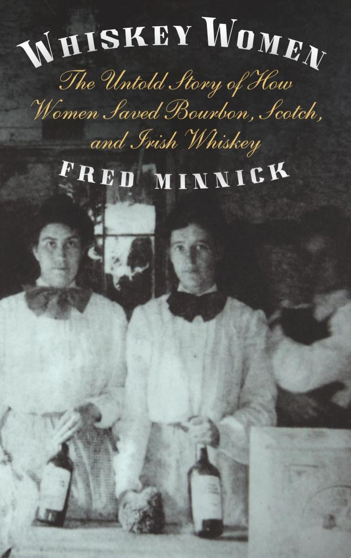
Join us at the Hungry Brain on Oct 16th for the release of Fred Minnick’s book Whiskey Women: The Untold Story of How Women Saved Bourbon, Scotch, and Irish Whiskey (and yes, the book will be available for purchase, courtesy of Quimby’s). Special discussion panel guests will be Monique Huston, whisky specialist at Stoller Wine & Spirits, “Still Stoker” Karen Sisulak Binder of Southern Sisters Spirits, Meg Bell – brand ambassador for Death’s Door Spirits and one of Chicago premier female distillers Sonat Hart from Koval Distillery.

About the book:
Shortly after graduating from University of Glasgow in 1934, Elizabeth “Bessie” Williamson began working as a temporary secretary at the Laphroaig Distillery on the Scottish island Islay. Williamson quickly found herself joining the boys in the tasting room, studying the distillation process, and winning them over with her knowledge of Scottish whisky. After the owner of Laphroaig passed away, Williamson took over the prestigious company and became the American spokesperson for the entire Scotch whisky industry. Impressing clients and showing her passion as the Scotch Whisky Association’s trade ambassador, she soon gained fame within the industry, becoming known as the greatest female distiller. Whiskey Women tells the tales of women who have created this industry, from Mesopotamia’s first beer brewers and distillers to America’s rough-and-tough bootleggers during Prohibition. Women have long distilled, marketed, and owned significant shares in spirits companies. Williamson’s story is one of many among the influential women who changed the Scotch whisky industry as well as influenced the American bourbon whiskey and Irish whiskey markets. Until now their stories have remained untold.

Please note: This event it NOT at Quimby’s. It is at The Hungry Brain, 2319 W Belmont Ave  Chicago, IL 60618 (773) 709-1401.

The Hungry Brain on Facebook: https://www.facebook.com/thehungrybrain

The Facebook Post for this event.

Wednesday, Oct. 16th

Q&A with Tonight’s Reader David Moscovich

David Moscovich

David Moscovich, author of You Are Making Very Important Bathtime, is no stranger to cross-country jaunts. The New York resident will be journeying here to Quimby’s for a reading with fellow writer Eckard Gerdes tonight. Nicki Yowell, Quimby’s Outreach and Communications Coordinator, caught up with David to chat about clumsy Japanese translations, the perils of teaching and the many iterations of his performances.

Quimby’s: You’ve resided in quite a few places during your life: Portland, New York, Boston, Japan. Would you say your personal well-rounded sense of place factors strongly into your work?

David Moscovich: My sense of place is probably more lopsided because of my personal geography — but being a Nebraska boy at root keeps me humble enough. Growing up in my own personal iron curtain as a Romanian-American in Nebraska gave me a sense of aloneness that didn’t disappear until I visited the old country as an adult. How does that translate into my work? I think it keeps experiences relative, and my attempt with Bathtime is to fuel misunderstandings between characters with even greater misunderstandings, to pose the assumptions of American and Japanese cultures in comical juxtaposition with each other. I try to expose the narrator’s biases and preconceptions in Bathtime by allowing him to gaff and to faux pas his way through most situations. In a sense, I tried to create a character who has committed a spiritual crime, a kind of culture-cide, but does not have the conscience to realize it. It torments him but not in the way a Raskolnikov is tormented.

Q: Flash fiction is a literary medium that seems to fit well with our times. Short, punchy, quick to get your attention. What draws you to shorter narratives? Are they more approachable in our temporally fractured culture?

DM: The way the story tells the story has to be more immediate in short fiction. I want to say more with less, and I also revise obsessively. It’s not that I am always drawn to the short form, but often I’ve cut back more than fifty percent of the words. You Are Make Very Important Bathtime is a complete rewrite of a much longer novel that I threw out to rework the voice. I wanted it to be about the voice. I also think of short fiction like punk rock. Put together fifty fast-paced songs and there is a concentrated performance that tells a longer story.

Q: The title of your latest book, You Are Make Very Important Bathtime, reminds me of a dubiously named website, Engrish.com. Translating Japanese to English can be a tenuous, problematic proposition, indeed. How does the central problem of language factor into the story?

DM: You Are Make Very Important Bathtime plays with the notion of weird, broken, unconventional and/or unaccepted grammar as a cause for celebration. Usually without thinking we accept grammar as a set of patterns that are “correct” in any given language without acknowledging that “correct” grammar might be viewed as merely another aesthetic.

Throughout the work is the comma splice, which came from a desire to intentionally circumvent the rules of punctuation and give the sense of reading each story in one long breath. The Japanese language also allows for females to refer to themselves by name. A character, Kimiko, says to the narrator: Kimiko loves okonomiyaki. These types of peculiarities fascinate me, like the fact that it’s possible to hold an entire conversation in Japanese without the use of a subject.

Language teachers might berate a student for collocational fumbles or syntactical mishaps but language itself loves errors and to me it sounds like poetry. Japanese is a very flexible tongue. Switch around verbs and nouns and leave out subjects, still we are understood. Languages are transforming, living beings, the long tentacles of cultures they are attached to. My attempt is to embrace all of it, to fully love the flexible grammar out there.

In one of the stories, a certain beer menu reads, “Please Choose the Drunk.” It’s incredible how much impact a single letter can have. And that is part of the book, this enormous potential that lies within the playing and shifting of letters.

Q: How has teaching shaped your point of view of writing? Do you ever picture your students as your audience or are you their audience?

DM: The goal for me is to marry writing and teaching by channelling them in a state of urgent transmission. Writing happens from a necessity of expression, as Rilke would have it. The delineation between teaching and the performance behind the writing disappears. That is the ideal — to share completely and selflessly what has worked for me as a writer, and equally so, what has not worked.

Q: Much of your work has a performance or performed component. You’ve done radio broadcasts and musical collaborations in addition to your live readings. Do you consider these performances to be separate and complete or a necessary companion to the written work you make?

DM: I like to think they compliment each other but ideally each stand alone. They are also different mediums. If a person prefers reading without the social aspect necessary for performance they can read instead. What I’m trying to do with the live performance is to offer something from my work that a reader cannot get just holding the book. But even within reading a written story to oneself there are so many possibilities. Any book could be read in a non-linear fashion as well as the traditional way from the first story to the last. You Are Make Very Important Bathtime was designed as a book to be read in any and every order whatsoever. The sequence offered in the book as published could be thought of as a “serving suggestion.” The reader sets the table.